The One Rein Stop with Horses

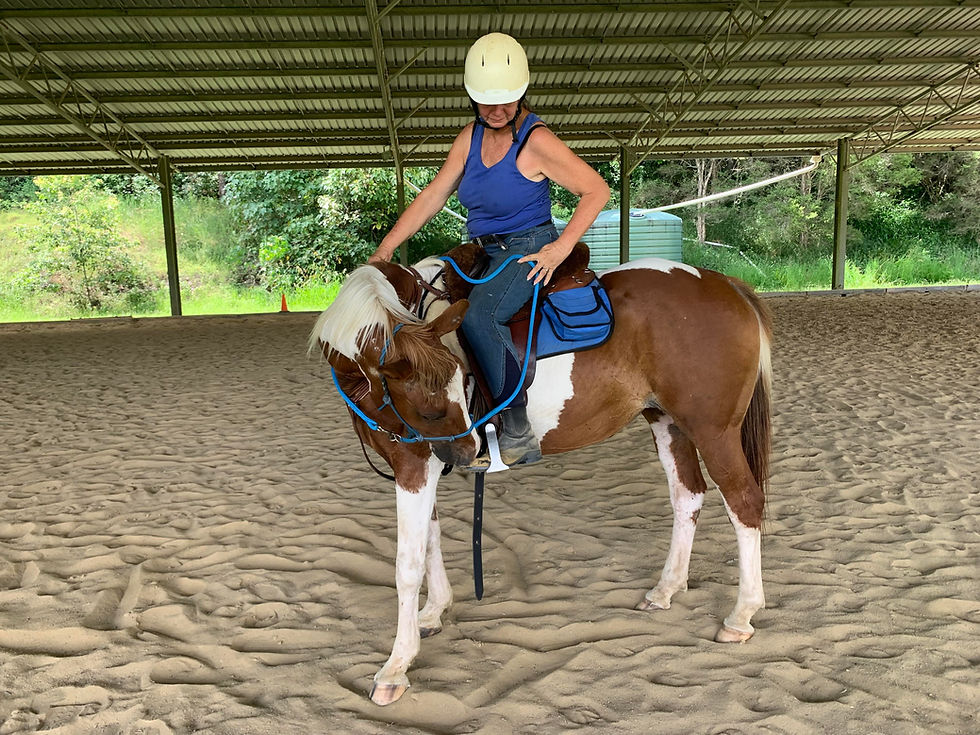
I absolutely love the one rein stop with horses. It’s one of the first things I teach my students, and we often revisit it at various points to ensure it stays easy and automatic for both the rider and the horse. Basically it’s built on the foundation that a horse cannot buck, bolt, rear or pigroot when the body is bent. In order to perform these types of manoeuvres a horses body needs to be straight. It’s why many trainers ensure the horses head is bent while mounting for the first few rides and with green broke horses.
When we ride bitless, clarity and trust are important. Without a bit in the horse’s mouth, we rely on the whole body conversation between us and our horse, rather than leverage or discomfort. This is where the One Rein Stop fits beautifully into bitless riding. It is not just an emergency brake, but a way to redirect energy, regain balance, and stay connected when things start to feel uncertain. It promotes communication, safety and connection.
The One Rein Stop means using a single rein to ask our horse to bend laterally through their neck and body, rather than pulling back on both reins to force a halt. When a horse bends, they cannot brace straight through their body or continue powering forward. The bend naturally softens their movement and invites them to slow down. Lateral flexion encourages relaxation, chewing, blinking, and a softening through the topline. Instead of escalating pressure, we reduce it by changing direction. Many horses learn that this bend is a safe place to come back to when they feel worried, excited, or distracted.
One of the reasons I value the One Rein Stop so highly is that it avoids the instinct to “pull” when something goes wrong. Pulling back on two reins can create confusion, pressure overload, or even panic if the horse does not understand what we are asking. The One Rein Stop gives us a more precise, one-directional conversation. We are not saying “stop now,” but rather, “let’s bend, slow, and come back together.”
As with any skill, the One Rein Stop needs to be taught before we rely on it. We begin at the walk, in a calm environment, making sure our horse understands how to follow a single rein without feeling trapped. We shorten one rein and bring our hand gently toward our hip or upper thigh, keeping the movement smooth and predictable. Sometimes it can help to press the hand holding the rein against the thigh, to stop it wobbling in mid air. It’s important to make sure the other hand moves forward, giving rein so the horse is able to bend. When people are first learning the one rein stop, these are the two most common errors. Applying pressure to the outside rein, and a waving, wobbling hand on the inside rein.
We wait for the horse to bend their neck and allow their body to follow. At first, they may simply turn their head while continuing forward, and that is part of the learning process. We stay patient, allowing their feet to slow as their balance reorganises. Sometimes they may walk in circles for a while, and that’s ok. The moment they stop, we fully release the rein. That release is what teaches the horse that slowing down and stopping is the right answer.
As confidence grows, we can practise the One Rein Stop at the trot and canter, always building gradually and ensuring both sides are equally clear. In bitless riding especially, the One Rein Stop is not about control, it’s about conversation. If we grab one rein in panic, our horse will feel that tension immediately. If we stay calm, balanced, and consistent, the bend becomes familiar and reassuring rather than alarming.
Ultimately, the One Rein Stop supports the values that draw many of us to bitless riding in the first place. It allows us to guide rather than force, to redirect rather than restrain, and to prioritise the horse’s emotional and physical wellbeing. When we use it thoughtfully, it becomes less about stopping and more about maintaining trust, even when things don’t go to plan.
Suzy Maloney B.Eq.Sc.Dip.Couns.
Happy Horses Bitless
Considerate Horsemanship
Email: suzy@happyhorsesbitless.com
FB: Happy Horses Bitless Bridles
Lismore, NSW, Australia
Ph: 0401 249 263


Comments